Original | Odaily Planet Daily (@OdailyChina)
Author | DingDang (@XiaMiPP)
Altcoins are dead—this is a consensus that crypto users have been reluctant to admit but have had to face over the past year. Even former blue-chip tokens have fallen into prolonged sideways movement or gradual declines amid the continuous market weakness, showing little sign of recovery.
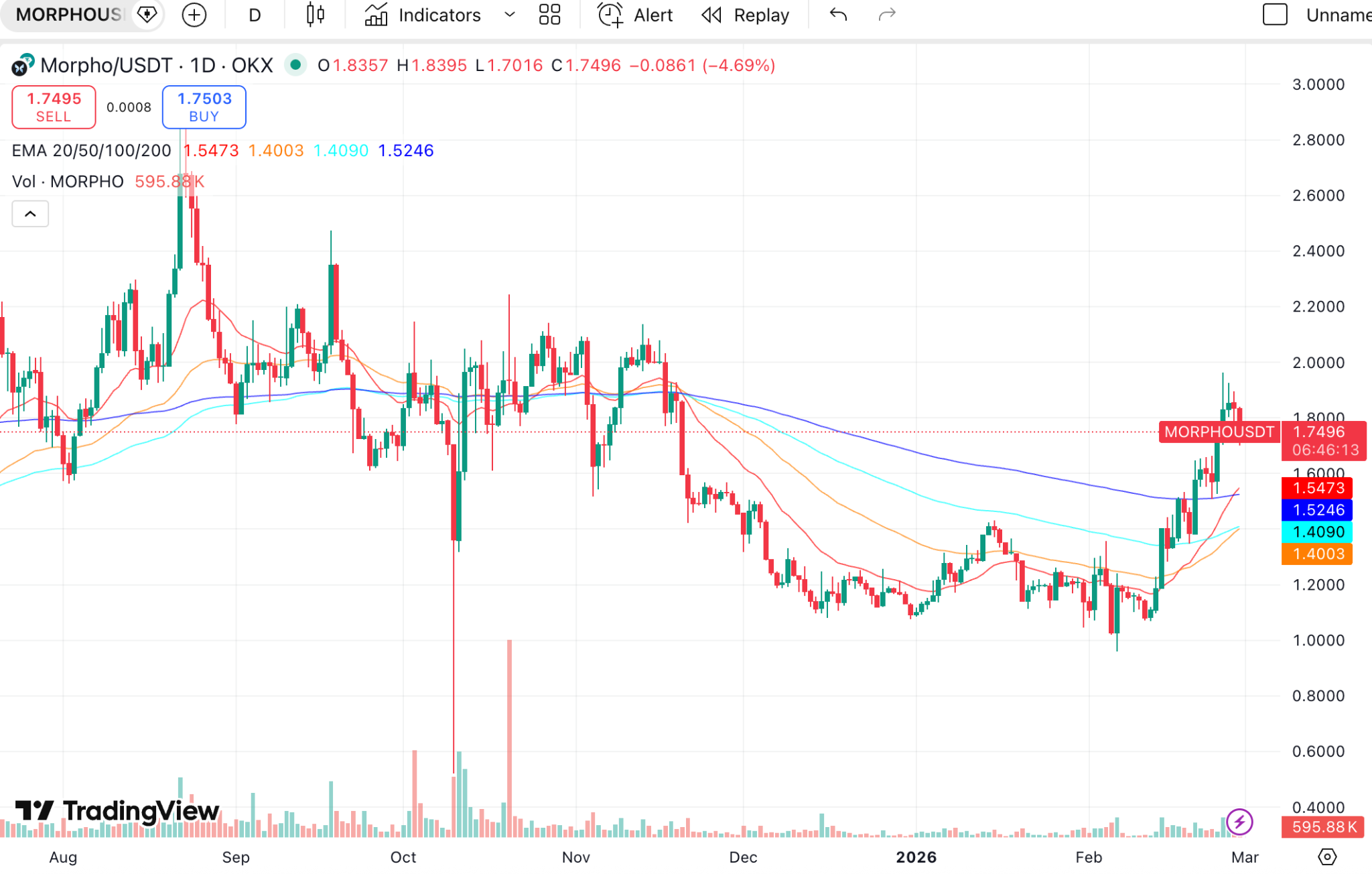
However, amidst this overall slump, the MORPHO token has rebounded from a low of $0.96 in early February to the $1.8-$1.9 range, doubling against the trend. From the daily chart perspective, this rebound has largely formed a rounded bottom pattern, potentially signaling a bottom reversal. Is this surge merely driven by short-term market sentiment, or is it the start of a trend fueled by fundamental and structural factors?
When the Old Dynasty Begins to Consume Itself
Morpho is a lending protocol launched in 2021. Initially, its mechanism was similar to lending protocols like Aave and Compound. However, in 2023, Morpho began rolling out Morpho Blue (now its main version), completely transforming into an independent, permissionless lending base layer, firmly positioning itself among the top lending protocols in the Ethereum ecosystem.
That said, in the lending sector, Aave remains the largest by volume and the strongest in brand—an undeniable fact. But recently, Aave has once again found itself in serious governance controversy due to a $51 million "Aave Will Win" funding framework proposed by its founder, Stani.
This fund was originally intended to support new product development, and the proposal explicitly stated that future related brand revenue would be 100% returned to the DAO treasury—a move that seemed like an ideal operation of "surrendering control and benefiting the community" by the project team. However, it unexpectedly ignited long-simmering internal conflicts within the DAO.
The reason is that DAO governance representative and ACI founder Marc Zeller publicly released an "audit" report on February 25, accusing Labs of low fund utilization, having taken approximately $86 million from the DAO over the past few years without transparent disclosure. Meanwhile, core DAO developer BGD Labs announced it would exit in April 2026 due to governance friction. The founder's high voting power once again dominated the controversial proposal, further pushing the entire DAO into an open tug-of-war over power and fund distribution. As early as December last year, cracks had already appeared within the Aave community. For details, refer to Can You Still Buy AAVE Amid Deep Divisions After the Second-Largest Holder Dumped Their Bag?.
Now, as Aave slows down due to governance friction, the "simplicity" of Morpho's governance model is beginning to catch many people's attention. Aave can be considered the first-generation lending governance paradigm of "DAO-led, global parameter adjustment," where all risk parameters (such as collateral factors and liquidation thresholds) are determined by global DAO voting. While this design ensures overall robustness, it easily leads to governance bottlenecks—any minor parameter adjustment requires broad community consensus, and any disagreement can delay decisions, especially during contentious periods, potentially paralyzing decision-making.
In contrast, Morpho follows a second-generation path of modularity and market-driven mechanisms: the protocol itself is highly permissionless, allowing anyone to create isolated markets at any time. The risk parameters for each market (such as LTV, interest rate curves, and liquidation incentives) are set by independent professional risk managers (curators), rather than relying on全网 DAO voting. This means risks are strictly localized within individual markets, with responsibility分散 to specific curators, significantly speeding up decision-making. Curators can quickly iterate parameters based on actual market conditions without waiting for global consensus. The advantage of this design is that it greatly reduces governance friction and decision delays.
When the old dynasty begins to consume itself, it may be an opportunity for new forces to overtake on the curve.
Data Verification: Does It Deserve This Window?
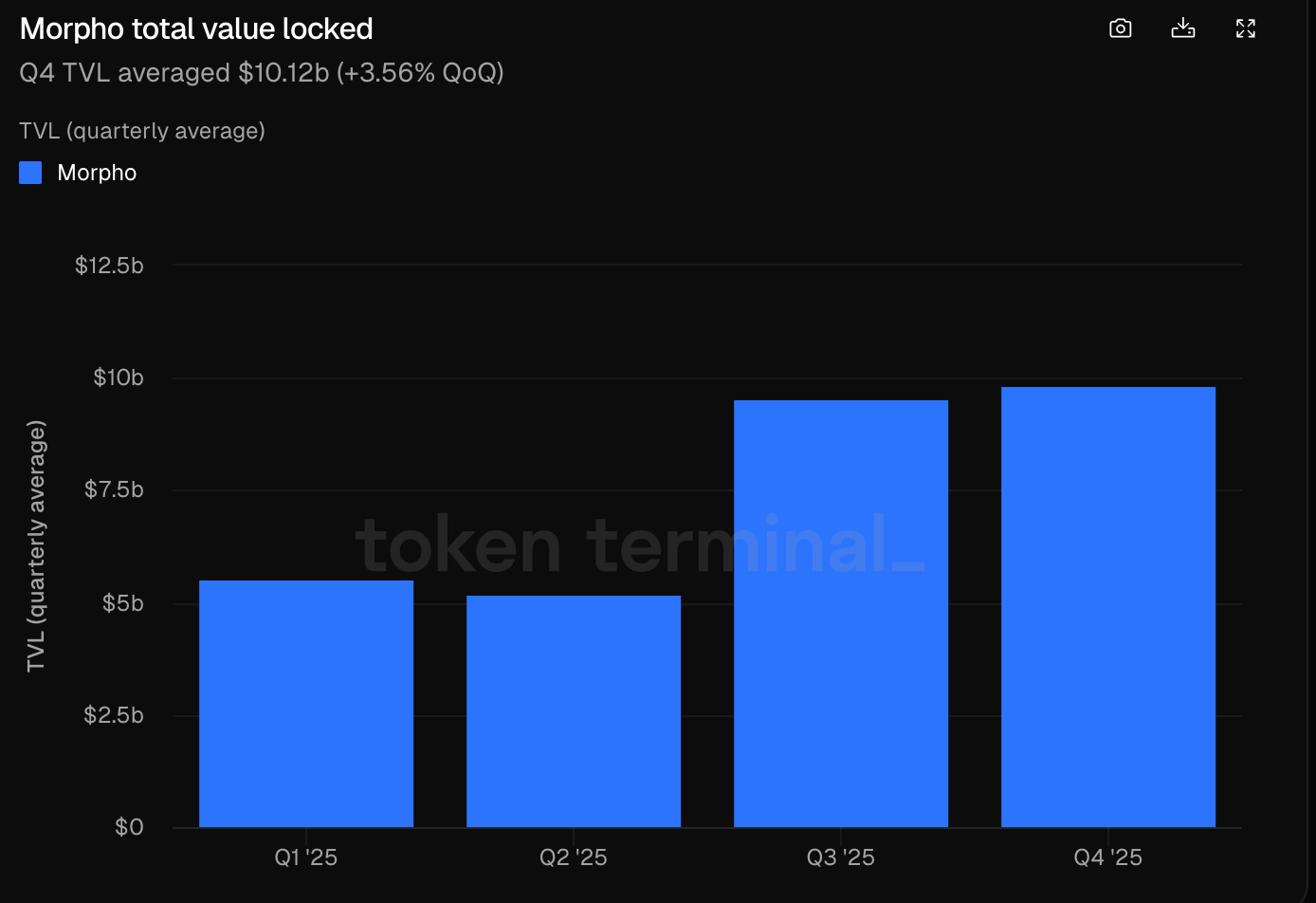
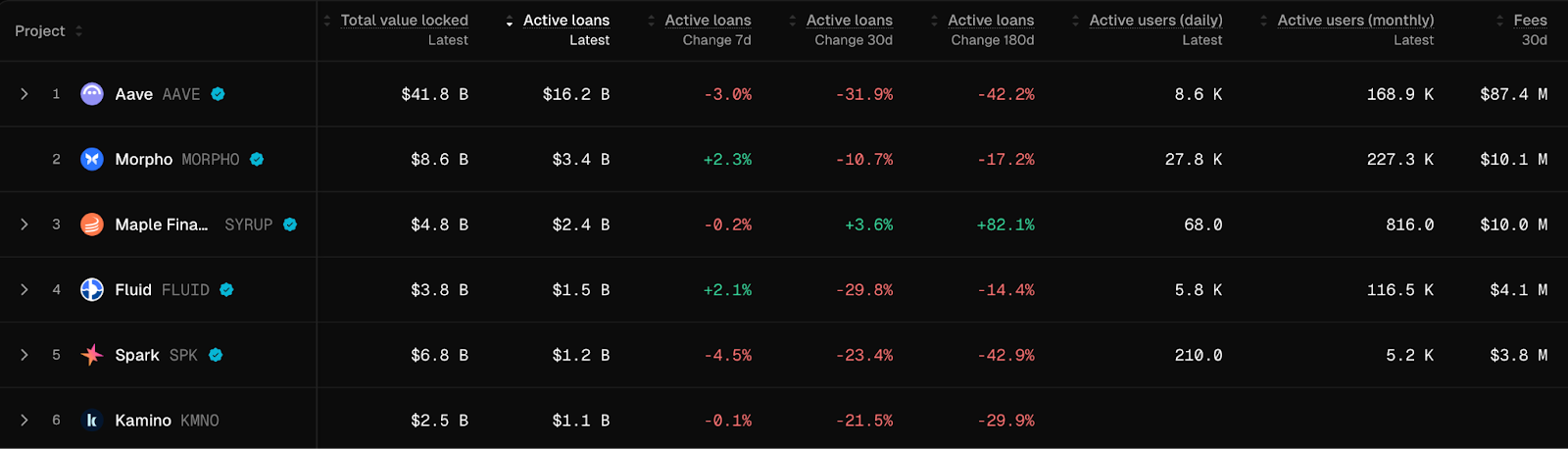
Let's look at Morpho's fundamentals to see if it has the potential to challenge Aave's lending throne. According to Tokenterminal data, in Q3 and Q4 of 2025, Morpho's protocol TVL remained above $9.5 billion, an increase of about 80% compared to the first half of the year.
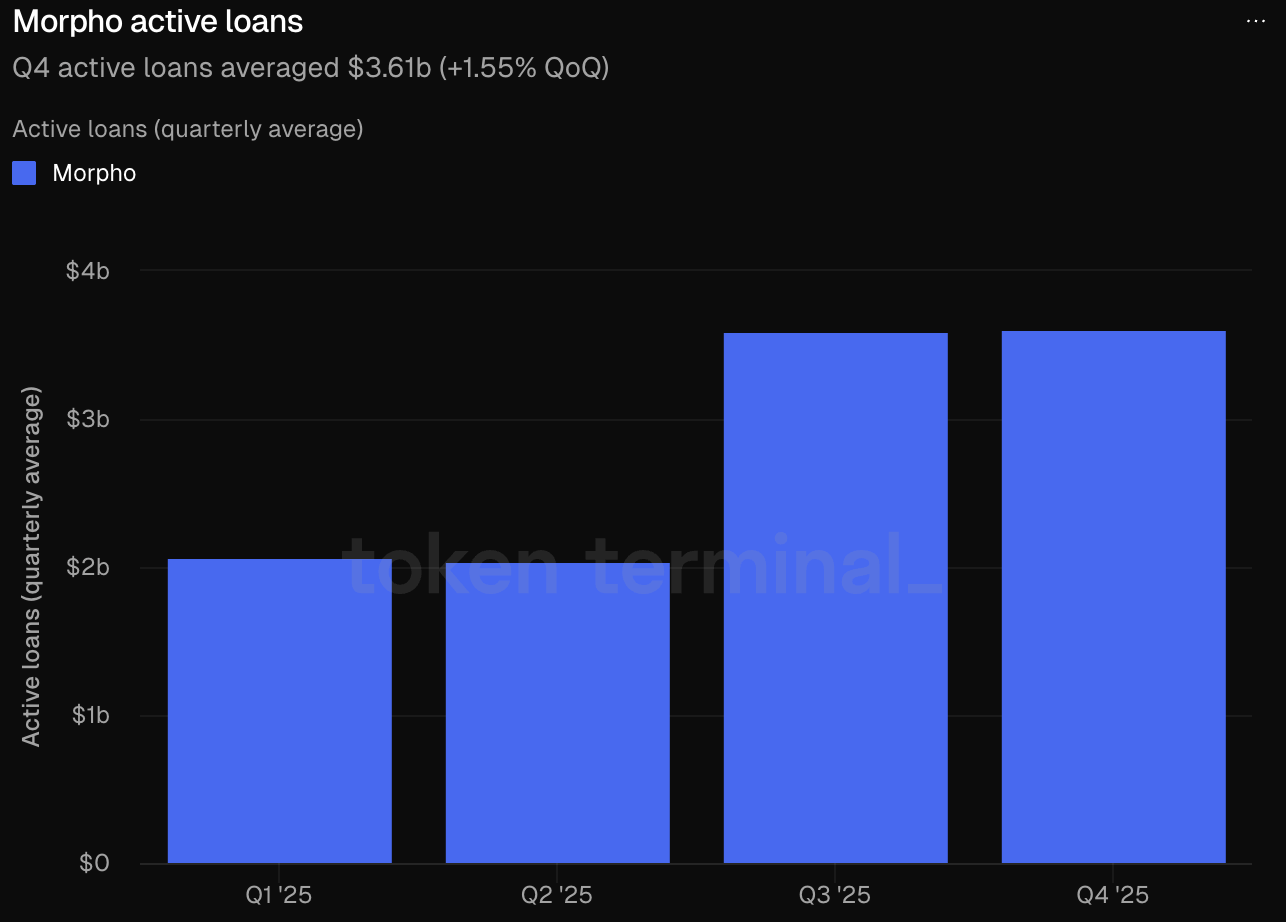
The active loan size within the protocol also stayed above $3.5 billion in both Q3 and Q4, a year-on-year increase of about 80%.
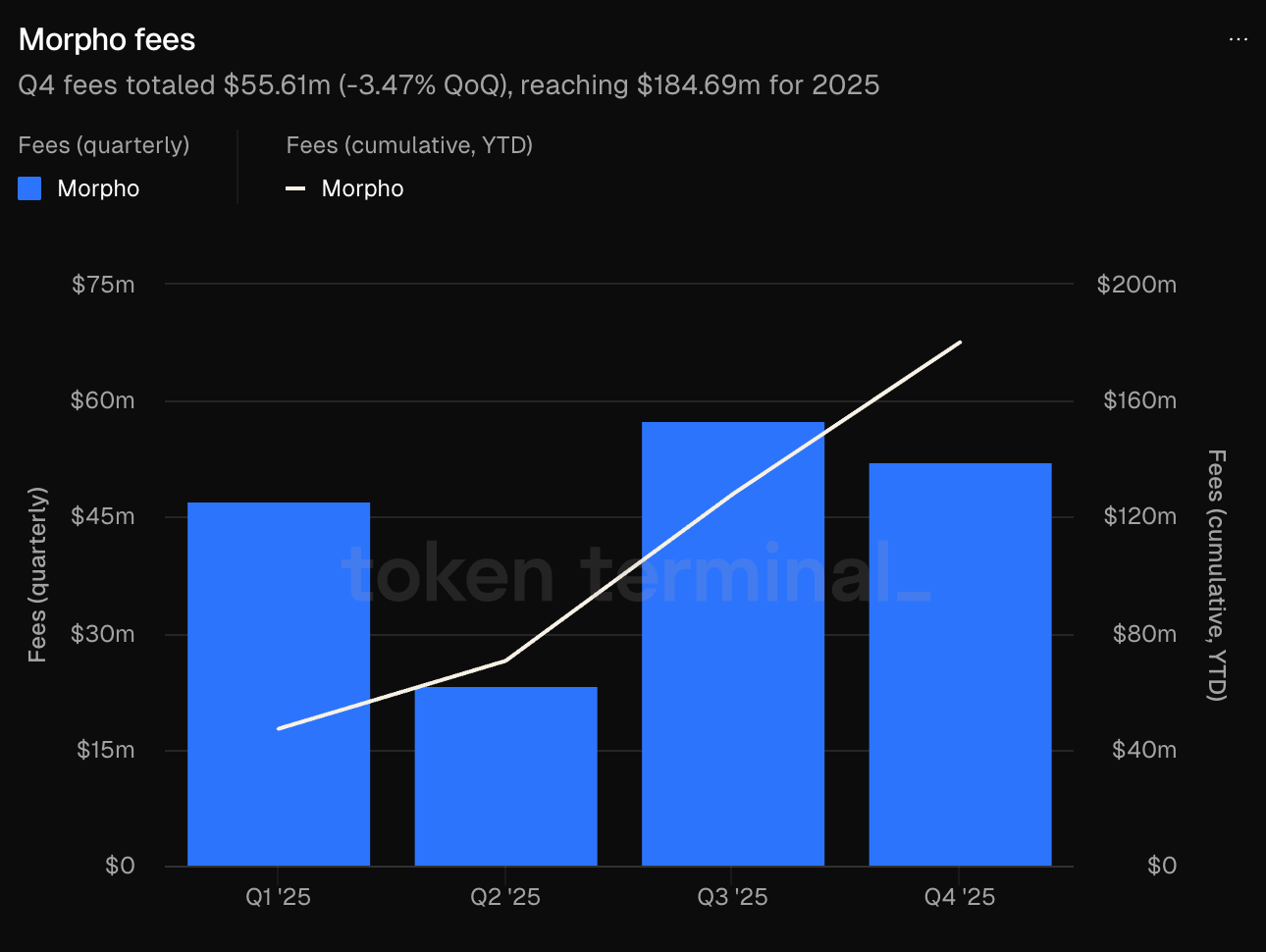
In terms of protocol revenue—one of the core metrics for DeFi protocols—aside from relatively weak performance in Q2, it remained stable at around $50 million in other quarters.
User growth is even more直观, with its quarterly active addresses rapidly expanding from about 30,000 in Q1 to the 400,000 level, showing strong organic growth momentum.
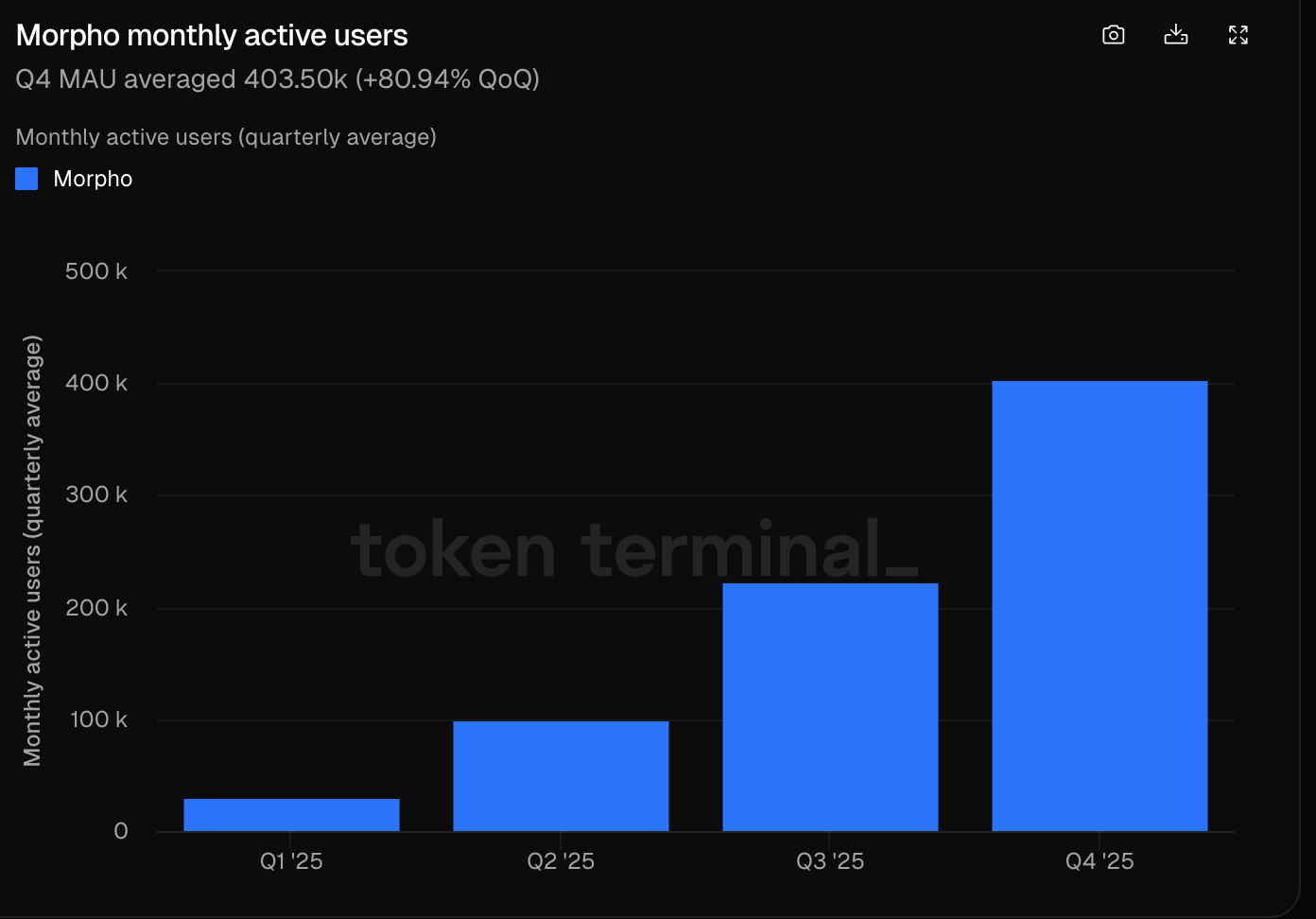
Although Morpho's current TVL and active loan size still lag behind Aave's, its user growth rate has made it one of the most aggressive "dark horses" in the lending sector. Especially against the backdrop of the entire DeFi sector generally under pressure and experiencing阵痛 in 2025, Morpho's performance can be considered achieving counter-trend high growth,足以证明 its product model has withstood market tests. Protocols that can continuously attract funds and users during bear markets often possess stronger爆发力 in the next cycle.
Institutional Variable: When Traditional Capital Starts Betting
Good fundamental data performance only proves that the protocol has a solid foundation, but the bigger catalyst that truly changes the market cap curve is the entry of traditional financial giants.
On February 13, Wall Street asset management giant Apollo Global Management signed a重磅 cooperation agreement with the Morpho Association, the non-profit organization behind Morpho. Specifically,strong> Apollo plans to gradually acquire up to 90 million MORPHO tokens over the next 48 months, equivalent to approximately 9% of Morpho's total supply. At the current price of $1.8, this is worth about $162 million.
From a trading perspective alone, this will bring sustained buying demand for MORPHO. But if you know Apollo, you'll understand that this is more like its strategic penetration into DeFi.
Apollo manages assets close to $940 billion, and its private credit business is known for pursuing high yields. The on-chain world can provide opportunities for leverage amplification and global instant liquidity. Since 2024, it has begun testing the waters in the crypto industry, with RWA as its main battlefield. It partnered with Securitize to tokenize its diversified credit strategy into ACRED, which now reached a scale of $130 million.
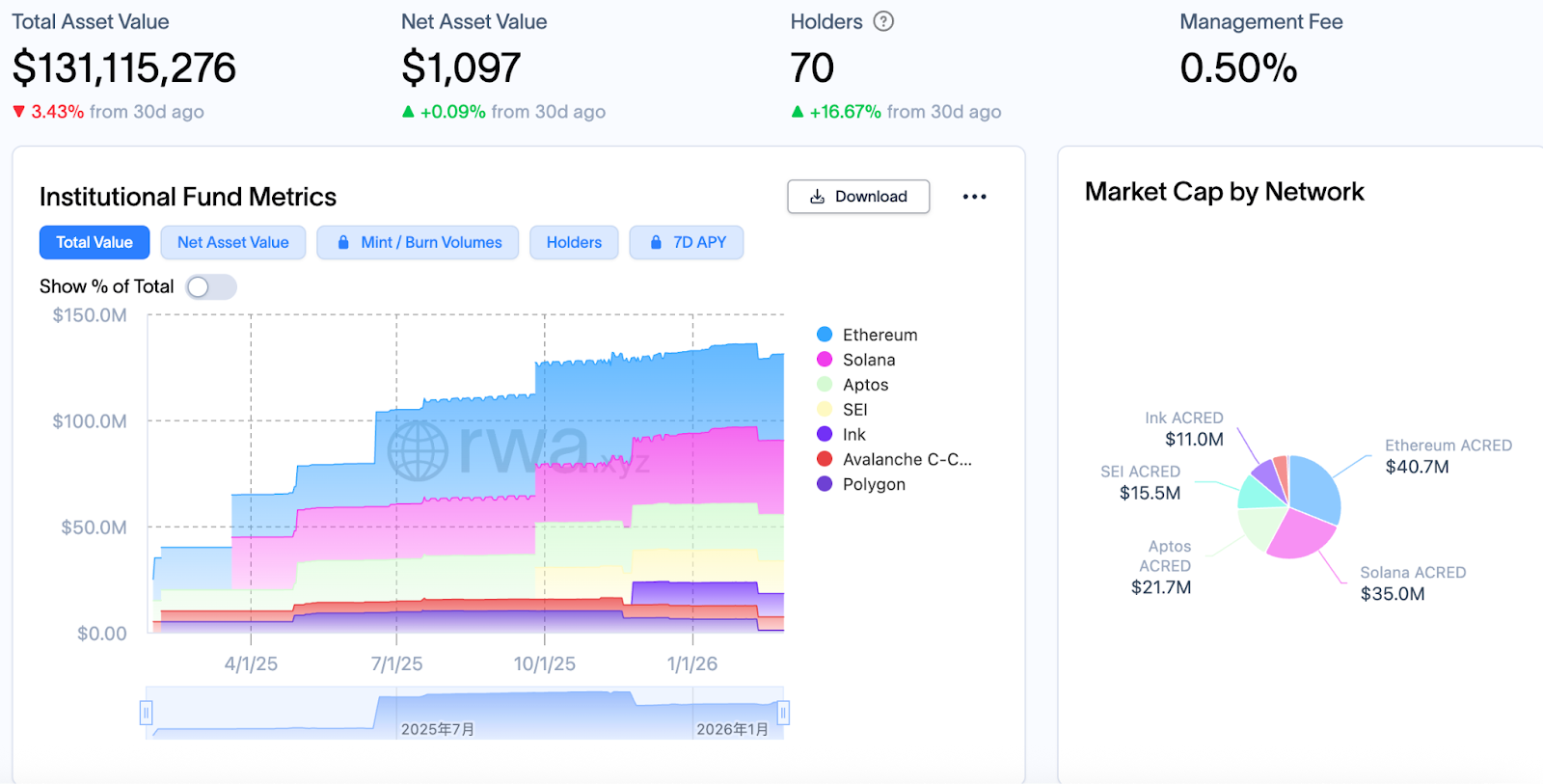
However, the core challenge after onboarding RWA has never been issuance but liquidity release. Assets can be tokenized, but without efficient lending markets and leverage environments, their yield potential is difficult to unleash. From Apollo's布局, it is not unreasonable to speculate that it likely intends to use Morpho's lending markets to amplify the yield of its credit products. Because Morpho's modular lending structure provides a天然适配场景 for RWA—isolated markets, independent risk parameters, and customizable leverage environments. These mechanisms are far more attractive to institutions than parameter games under unified governance.
This speculation is not without basis, because although Morpho is highly permissionless, key parameter options still need to be expanded through Morpho DAO governance. If Apollo holds a significant amount of MORPHO tokens, it will gain corresponding voting power and may promote the addition of RWA-friendly parameters. If Apollo's intentions materialize as推测, Morpho's modular design could attract more institutional funds, accelerating inflows and making it key infrastructure for amplifying institutional credit products on-chain. This institutional-level endorsement would not only strengthen Morpho's competitive advantage but also narrow the gap with Aave—especially when Aave is deeply mired in internal governance issues.
Conclusion
Aave's governance crisis may continue to drag down its market cap and liquidity in the short term, while Morpho, leveraging its product structural advantages and institutional catalysts, is quietly rewriting the competitive landscape of the lending sector. However, whether Morpho can truly shake Aave's throne still depends on its continued TVL追赶 and more TradFi players joining the fray. But至少 for now, the power transition for the "second-generation lending leader" has already begun.
Risk提示: MORPHO tokens will undergo a large unlock in March, belonging to the Morpho DAO, Morpho Association reserve, and core contributors. Short-term liquidity impact requires attention.